
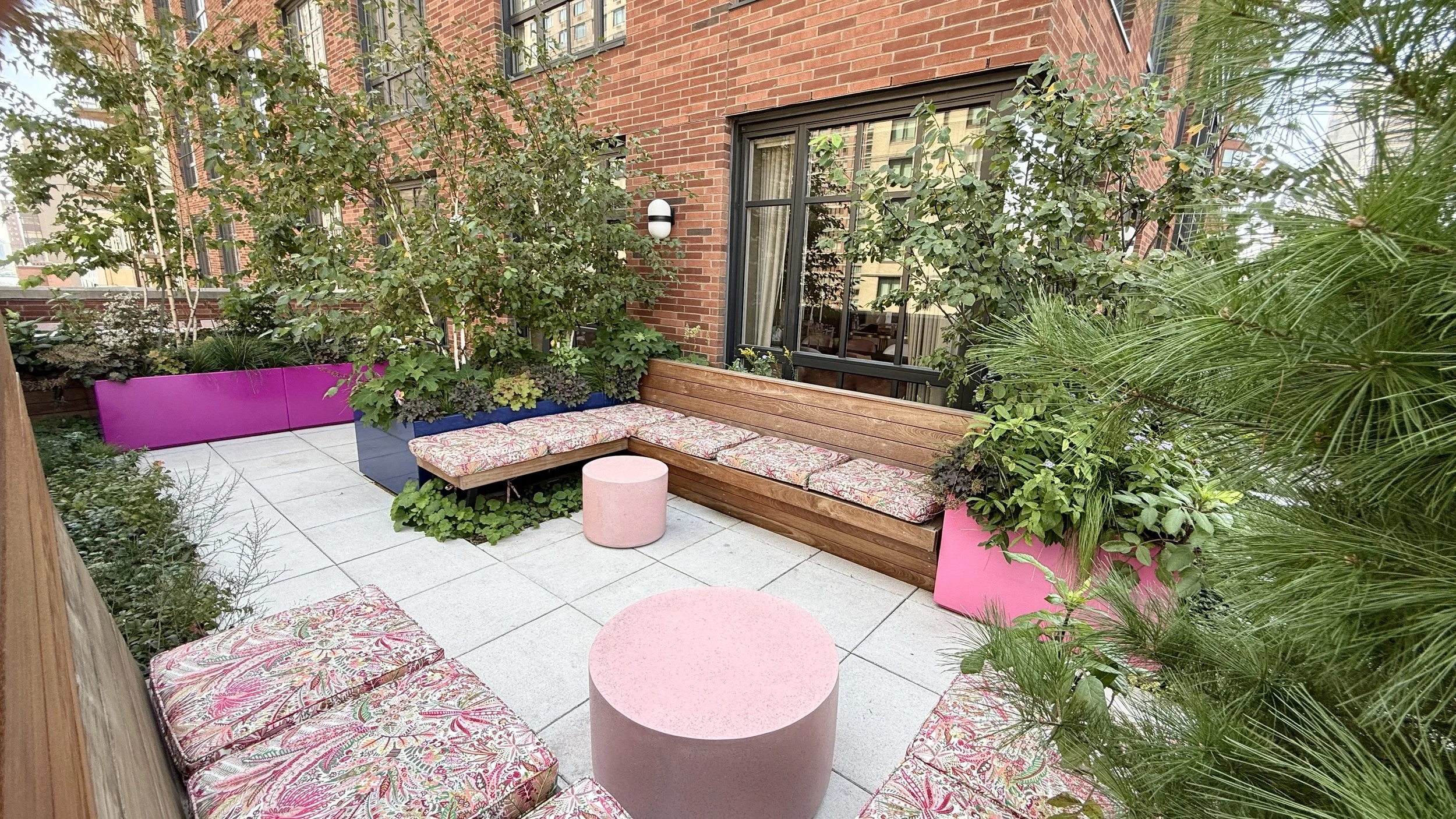
Rooftops are Challenging but Transformative Landscapes
At first glance, a rooftop may seem like an unlikely place for a thriving garden. Exposed to relentless sun, high winds, temperature extremes, and significant structural constraints, rooftops are among the most demanding environments in which to establish and maintain a landscape. These conditions require careful consideration of weight loads, drainage, irrigation, and plant selection—factors that shape every aspect of the design process. Yet when thoughtfully
conceived, these elevated spaces become vibrant, functional extensions of architecture and home, offering value that extends well beyond aesthetics.
Architecture in Dialogue with Living Systems
Rooftop gardens occupy a unique intersection of landscape and architecture, transforming built form into living systems capable of addressing pressing environmental challenges, particularly in dense urban contexts like New York City. They help reduce stormwater runoff by capturing rainfall before it enters municipal drainage infrastructure, mitigate the urban heat island effect by replacing heat-absorbing surfaces with vegetation, and improve building performance through the insulating properties of soil and plant material.
In this way, rooftop landscapes extend the reach of architecture beyond the building envelope, contributing to broader ecological networks while creating moments of refuge for clients and habitat for urban wildlife.
Why Native Plants Matter in Rooftop Design
Native plant species, adapted to regional climate conditions, are often better suited to the extreme exposure of rooftop environments. They typically require fewer inputs over time and provide essential resources for local pollinators and bird populations. In the sections below, we highlight several of our preferred rooftop plants and explain why they perform particularly well in these demanding conditions.
Trees for Rooftop Gardens
Multi-Stem Birch (Betula nigra / populifolia)
Multi-stem birch is well suited to full sun rooftop conditions for both practical and aesthetic reasons. Its small, light leaves create dappled shade, are ideal for high winds and are easy to manage at season’s end, reducing the risk of drainage issues. The flexible branching structure allows it to perform well under high wind loads, where more rigid species may struggle or fail.
Its multi-stem form also makes it easier to transport and install on rooftops, as individual stems can be maneuvered through interior building access points more efficiently than single large trunks. In addition, birch naturally develops relatively shallow root systems, typically concentrated in the upper soil profile. This aligns well with the limited soil depths common in rooftop planting systems.
Perennials / Grasses
Geranium (Geranium maculatum / Geranium macrorrhizum)
Geraniums are reliable, low-maintenance perennials with slowly spreading surface root systems that do not aggressively compete with neighboring plants, which is ideal when you have a 12” soil profile and limited room for the plant to expand. They are well suited to planting along the edges of containers, where they can spill gently over the sides to soften hard architectural lines. Their restrained height also makes them ideal for underplanted companion to a shrub which can be used to create a layering effect.
Geranium macrorrhizum in particular offers strong aromatic foliage with a scent reminiscent of citronella, adding an additional sensory layer to the planting palette.
Coreopsis ‘Zagreb’
Coreopsis ‘Zagreb’ is a compact, fibrous-rooted perennial that performs well in shallow substrates and full sun. It remains upright and well structured throughout the growing season, avoiding the floppiness common in other perennials. From a maintenance perspective, it is especially valuable in rooftop systems because it divides easily. This allows for efficient thinning and replanting as part of routine maintenance cycles, helping to sustain long-term plant health in confined soil volumes. This species also blooms prolifically throughout summer to first frost.
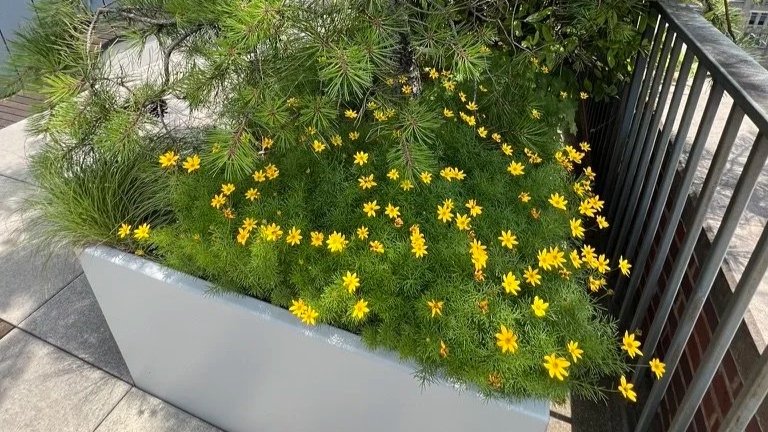
Coreopsis ‘Zagreb’ / Tickseed
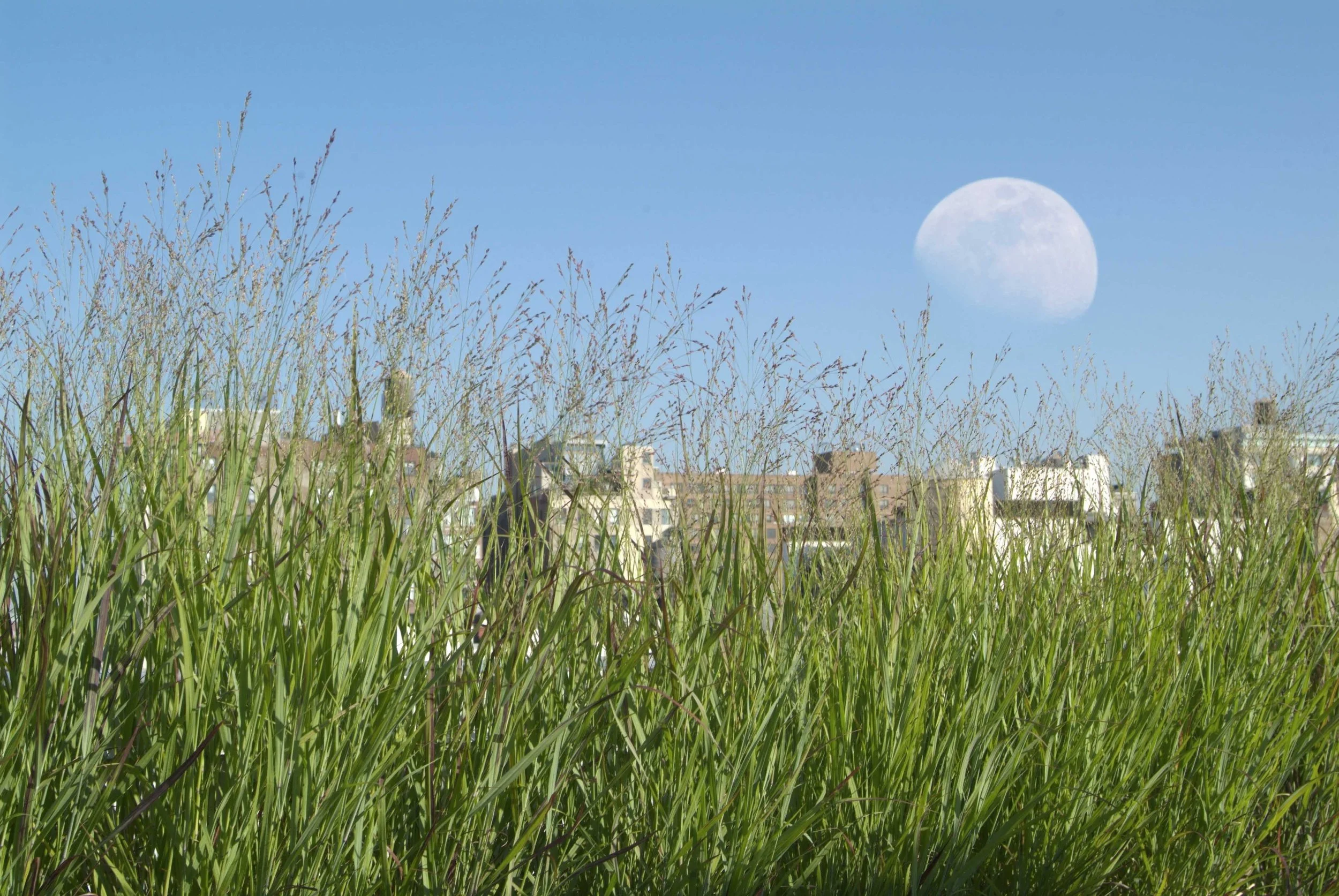
Switchgrass (Panicum virgatum)
Switchgrass is one of the most consistently successful grasses in our rooftop projects. It provides height and structure, often reaching up to six feet, making it an effective tool for screening and spatial definition. Despite its height, switchgrass remains highly wind-resilient due to its flexible structure. Rather than resisting wind, it moves with it, creating dynamic visual interest as the blades respond to changing conditions. Its upright habit allows it to form a loose “green wall” without collapsing or requiring excessive support.
Shrubs
Inkberry Holly (Ilex glabra)
Inkberry holly is a compact, evergreen shrub well suited to rooftop environments, where restrained growth habits are often preferred. It performs as a strong ecological alternative to traditional boxwood, offering similar structure with greater ecological value and resilience.
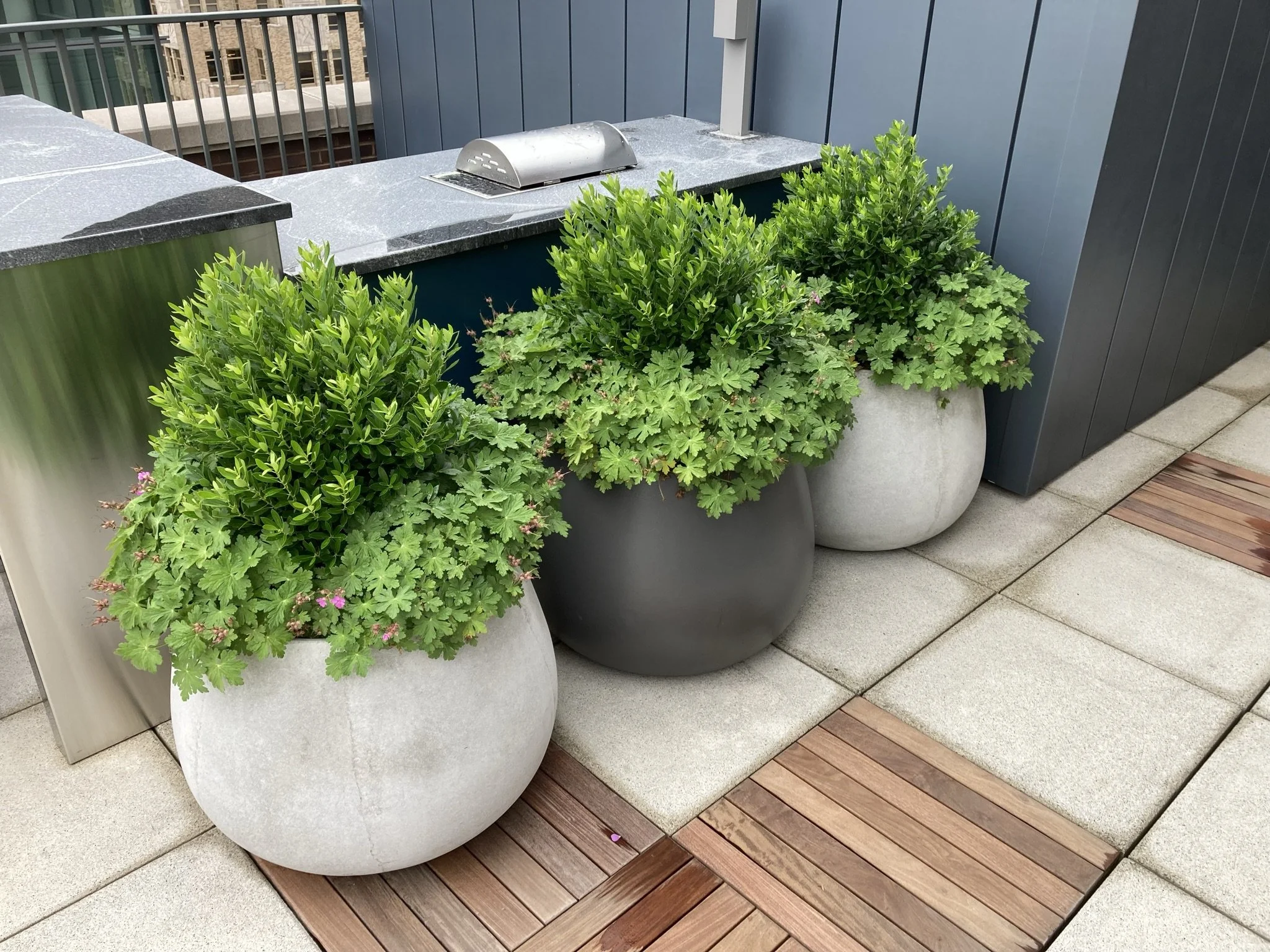
Ilex glabra/Inkberry holly
Blueberry (Vaccinium corymbosum)
Blueberry has proven to be a reliable shrub in multiple rooftop installations, demonstrating strong tolerance for wind exposure and harsh winter conditions. It offers multi-season interest, from spring flowers to vibrant autumn foliage, and produces edible fruit in mid-summer.
In our experience, blueberry performs best when paired with non-aggressive companions. It can struggle when overcompeted by vigorous groundcovers such as phlox, but thrives when combined with softer, less competitive species such as the above mentioned Geranium macrorrhizum or Fragaria virginiana.
-written by Kyle Schroeder, landscape designer
