
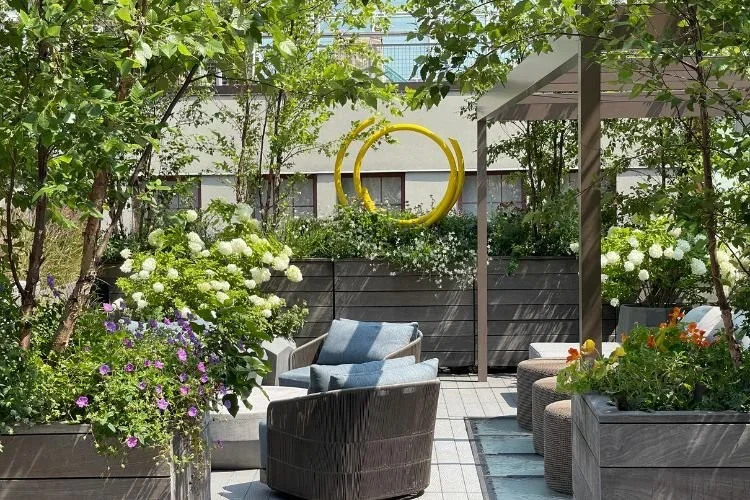
To maximize space in a small rooftop garden, keep the layout simple, use the perimeter and vertical surfaces, choose multifunctional furniture, and avoid filling every available area. The goal is not to fit more into the rooftop, but to make each element work harder.
With thoughtful planning, even a compact urban rooftop can provide space for planting, seating, dining, and privacy without feeling crowded.
Start With How You Want to Use the Rooftop
Before adding plants or furniture, decide what matters most.
If outdoor dining is the priority, make the table the focus. If you want a quiet garden retreat, dedicate more room to comfortable seating and planting. Trying to accommodate dining, lounging, cooking, gardening, and entertaining in a very small space can make the rooftop less functional.
Choose one primary purpose and allow the rest of the design to support it.
Use the Perimeter for Planting
Keeping larger planters around the edges leaves the center of the rooftop open for movement and seating.
Long, narrow planters can provide substantial greenery without taking up unnecessary floor space. Taller plants can also create privacy from neighboring buildings while adding depth to the garden.
Rather than using many small pots, a few thoughtfully positioned planters often create a calmer and more cohesive landscape.
Think Vertically
When floor space is limited, use height.
Trellises, climbing plants, wall-mounted planters, and narrow upright plants can introduce greenery without occupying much of the usable rooftop.
Vertical planting can also soften walls and screens while drawing the eye upward, which can make a compact space feel more generous.
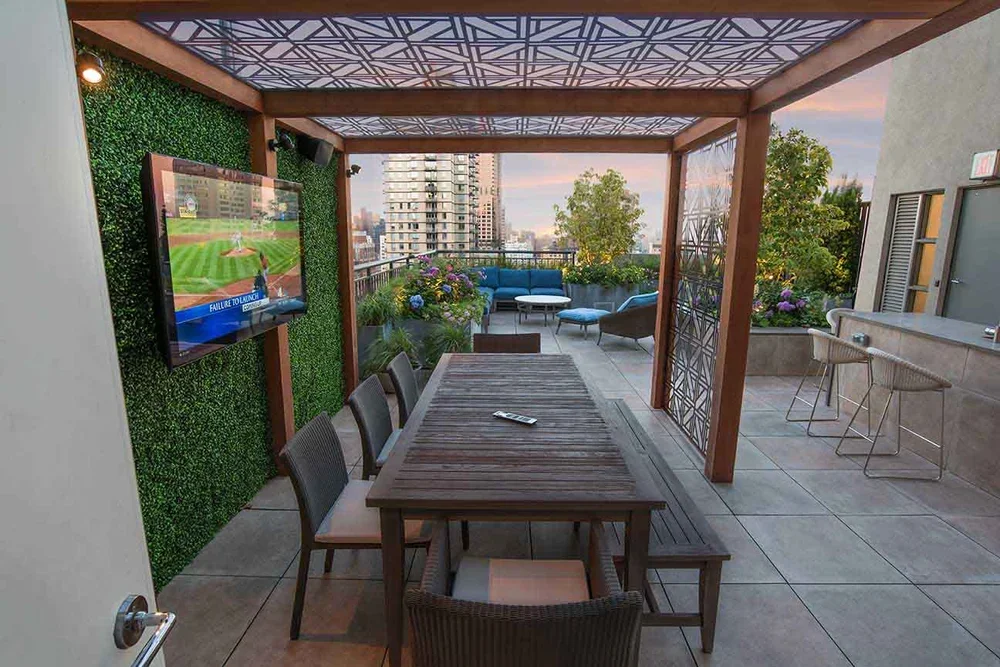
Choose Furniture That Does More Than One Job
Multifunctional furniture is particularly useful in a small rooftop garden.
A built-in bench might provide seating as well as storage. A planter edge can occasionally function as informal seating. Folding or lightweight furniture can be moved when additional open space is needed.
Scale matters too. Large outdoor furniture may be comfortable, but it can quickly dominate a small terrace.
Keep Circulation Clear
A small rooftop feels even smaller when people have to navigate around furniture and containers.
Maintain a simple, unobstructed path between the entrance, seating, and other frequently used areas. Avoid placing decorative elements simply because there is an empty corner.
Some open space is valuable.
It gives the garden room to breathe.
Use Planting to Create Depth
Layering plants at different heights can make a small garden feel richer without requiring a large footprint.
Low perennials and grasses can sit in front of shrubs or taller planting, while a small tree may provide a vertical focal point where structural conditions allow.
Choose plants according to sunlight, wind, soil depth, and the rooftop's broader microclimate rather than size or appearance alone.
Preserve the Best Views
Not every edge needs to be screened.
If the rooftop overlooks a skyline, garden, or interesting architecture, keep that sightline open. Concentrate privacy planting only where neighboring windows or buildings create a genuine need for screening.
The uninterrupted view can visually extend the garden beyond its physical boundaries.
Keep the Design Simple
Small spaces benefit from restraint.
Using a limited palette of materials, planter styles, furniture, and plants can make the rooftop feel more unified. Too many different colors, containers, and decorative objects tend to break the space into smaller visual pieces.
This approach is especially relevant in urban rooftop design. Todd Haiman Landscape Design considers terraces in relation to the architecture, site conditions, views, and the way clients intend to use the space. On a compact rooftop, those relationships become particularly important because every design decision is noticeable.
What Is the Best Layout for a Small Rooftop Garden?
The best layout usually keeps circulation and usable space toward the center while placing planting, storage, and privacy elements around the perimeter.
However, the exact arrangement should respond to the rooftop itself. Sun, wind, access, views, structural capacity, drainage, and building requirements can all influence where different elements belong.
Make Less Space Do More
Maximizing a small rooftop garden is not about squeezing more things into it.
Prioritize what you will actually use. Take advantage of vertical space, combine functions where possible, preserve important views, and leave enough open space for the garden to feel comfortable.
When every element has a clear purpose, a small rooftop can feel surprisingly spacious.
