

A rooftop garden can turn an underused part of a building into a comfortable outdoor retreat. In a city, it can provide space for dining, entertaining, gardening, or simply stepping away from the activity below.
The best rooftop garden designs are not created by adding as many features as possible. They begin with the space itself, how it will be used, where the sun falls, how exposed it is to wind, which views should remain open, and where greater privacy is needed.
Here are some practical rooftop garden design ideas to consider.
1. Design the Rooftop as an Outdoor Room
Think about how you want to use the roof before choosing plants or furniture.
A small terrace might become an intimate seating and dining area, while a larger rooftop can accommodate separate spaces for lounging, entertaining, and gardening.
The transition from indoors matters too. Using complementary materials and positioning planting along important views can help the rooftop feel like a natural extension of the home.
2. Create Privacy with Planting
Privacy does not require enclosing the entire rooftop.
Trees, shrubs, tall grasses, planters, trellises, and screens can be positioned where neighboring buildings overlook the space while leaving desirable city views open.
This creates a sense of enclosure without making the garden feel closed in.
3. Choose Plants for Rooftop Conditions
Rooftops often experience stronger wind, intense sunlight, reflected heat, and faster soil drying than gardens at ground level.
Choose plants according to the rooftop's actual microclimate rather than appearance alone.
Hardy perennials, ornamental grasses, resilient shrubs, and drought-tolerant plants can work particularly well in exposed conditions. Sheltered or shaded terraces may support a wider range of planting.
4. Add Comfortable Shade and Seating
A beautiful rooftop will not be used very often if it is uncomfortable.
Pergolas, umbrellas, canopies, or carefully positioned trees can provide relief from summer sun. Seating should be proportionate to the space and leave enough room for easy movement.
On smaller rooftops, built-in benches can combine seating with storage or planting.
5. Use Planters to Shape the Space
Planters can do more than hold plants.
Large containers can define boundaries, guide circulation, create privacy, or separate dining and lounge areas. Using a limited range of complementary planter materials and shapes generally creates a calmer, more cohesive design.
Planter depth should also match the root requirements of the plants being grown.
6. Make the Most of the View
A rooftop often has something a ground-level garden does not: an elevated perspective.
Instead of screening every edge, identify the strongest views and design around them. Seating can face a skyline, while planting can frame rather than obscure the view.
A beautiful existing view can become the garden's most effective focal point.
7. Add Subtle Outdoor Lighting
Lighting allows the rooftop to remain inviting after sunset.
Rather than illuminating everything equally, use light selectively. Highlight a tree, softly illuminate planting, provide practical lighting around seating and pathways, or draw attention to an architectural feature.
Subtle lighting usually creates a more comfortable atmosphere than bright overhead illumination.
8. Plan for Wind, Water, and Weight
Practical considerations should be part of the design from the beginning.
Rooftop gardens need appropriate drainage and irrigation, particularly because containers can dry quickly in sun and wind. Structural capacity also matters because soil, planters, paving, plants, furniture, and retained water all contribute weight.
Building requirements and access should be reviewed before major landscape elements are introduced.
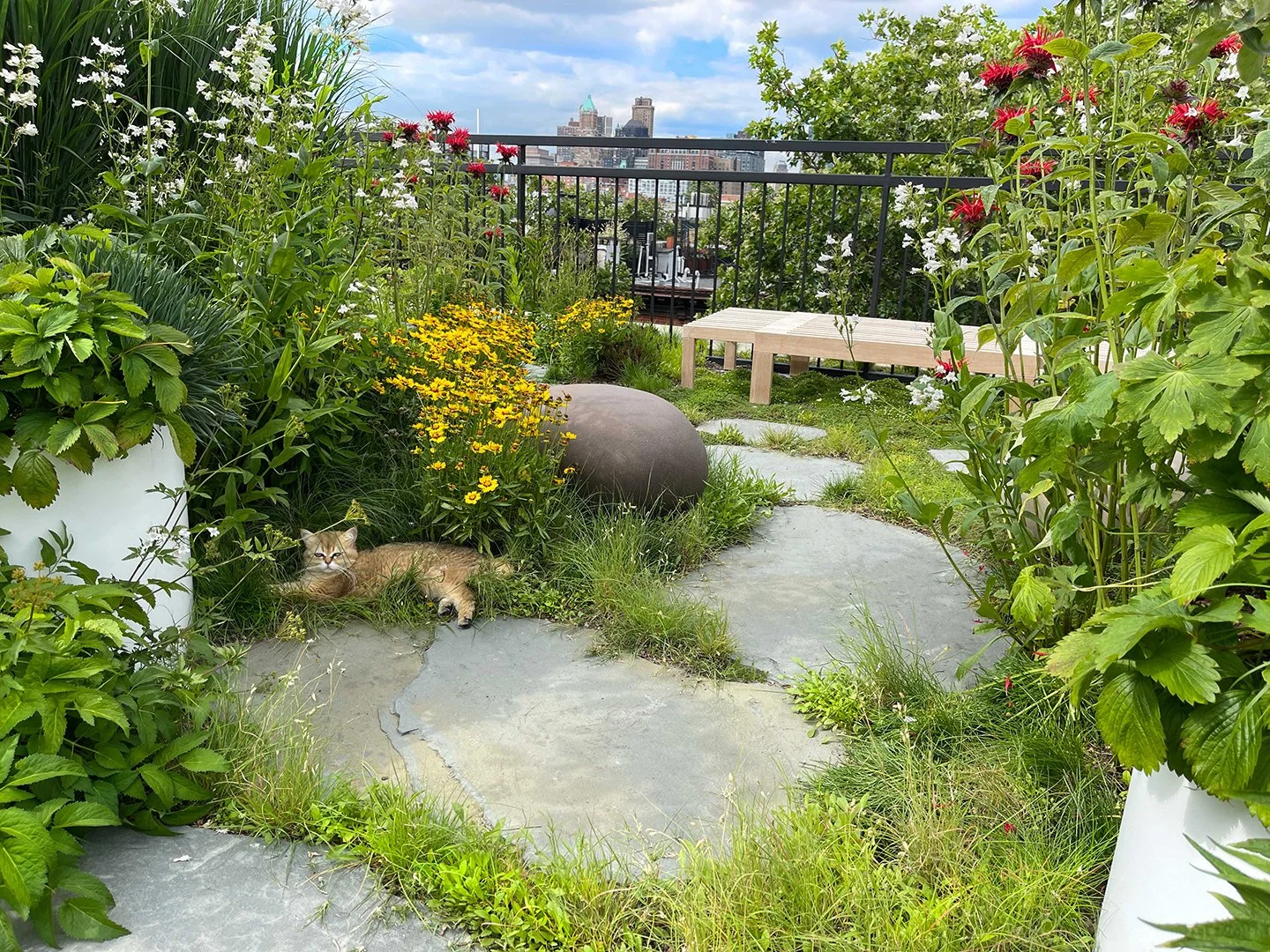
How Does Professional Rooftop Garden Design Help?
A well-designed rooftop brings together aesthetics and practical requirements rather than treating them separately.
New York landscape designer Todd Haiman Landscape Design approaches rooftop and terrace gardens in relation to the architecture, site conditions, and way clients want to experience their outdoor space. This site-specific approach is particularly important in cities, where exposure, neighboring buildings, views, and building requirements can vary significantly from one rooftop to another.
The result should feel less like a collection of outdoor features and more like a garden that belongs to the property.
FAQs
What makes a good rooftop garden?
A good rooftop garden balances comfortable seating, appropriate planting, privacy, views, shade, and circulation while responding to wind, sunlight, drainage, and structural requirements.
What plants are best for rooftop gardens?
The best plants depend on climate and exposure. Hardy grasses, perennials, shrubs, sedums, and other drought- or wind-tolerant plants can work well on exposed rooftops.
How can I make a small rooftop garden look better?
Keep the layout simple, use multifunctional elements, choose appropriately scaled furniture, and use planting vertically or around the perimeter rather than filling the center.
Designing a Rooftop That Feels Like Home
A successful rooftop garden does not need to be complicated.
Start with how you want to live in the space. Preserve the best views, create privacy where it is genuinely needed, choose plants suited to the conditions, and use materials and furniture that relate naturally to the architecture.
When each element has a reason to be there, even a relatively small rooftop can become one of the most enjoyable spaces in the home.
