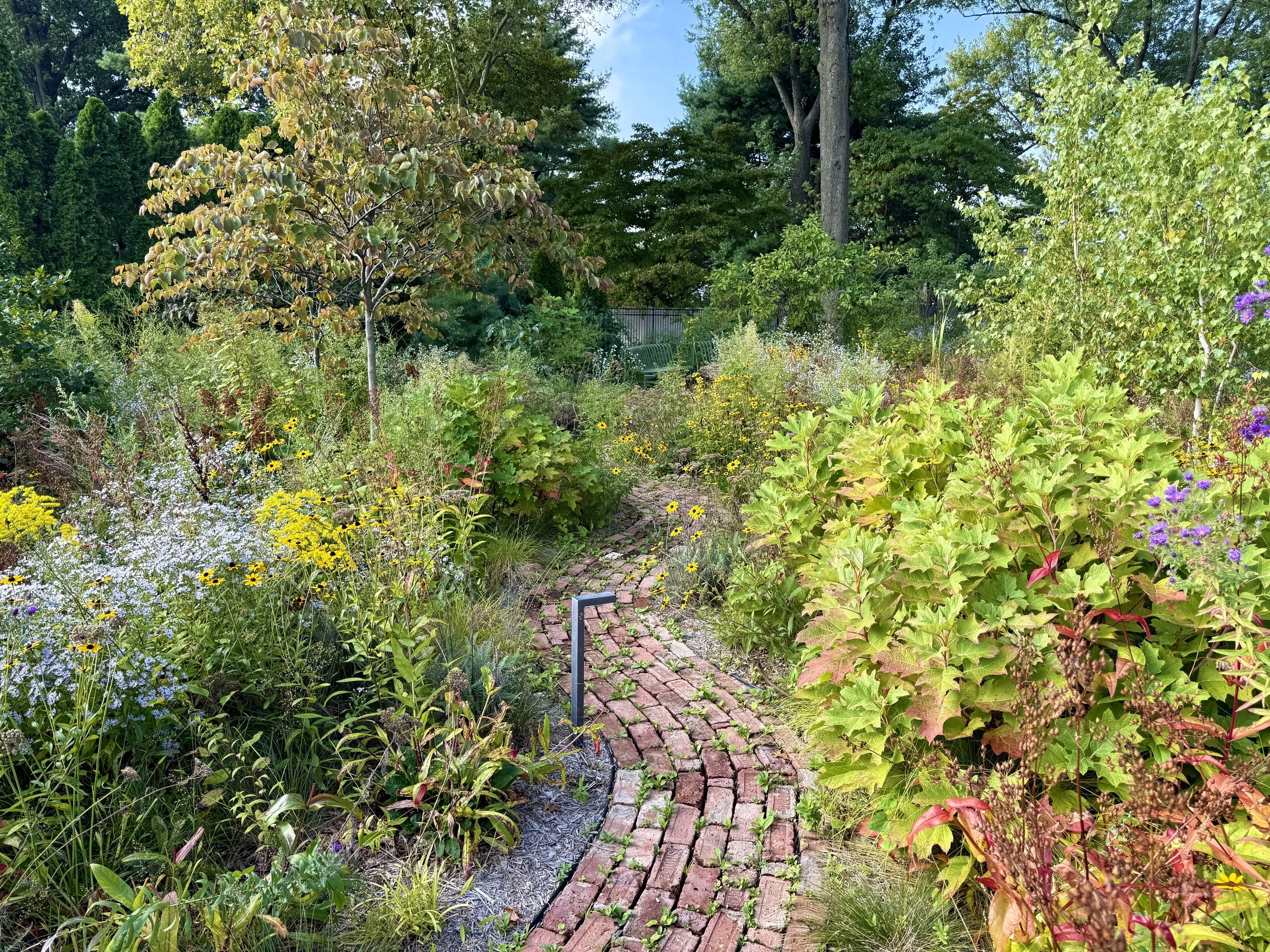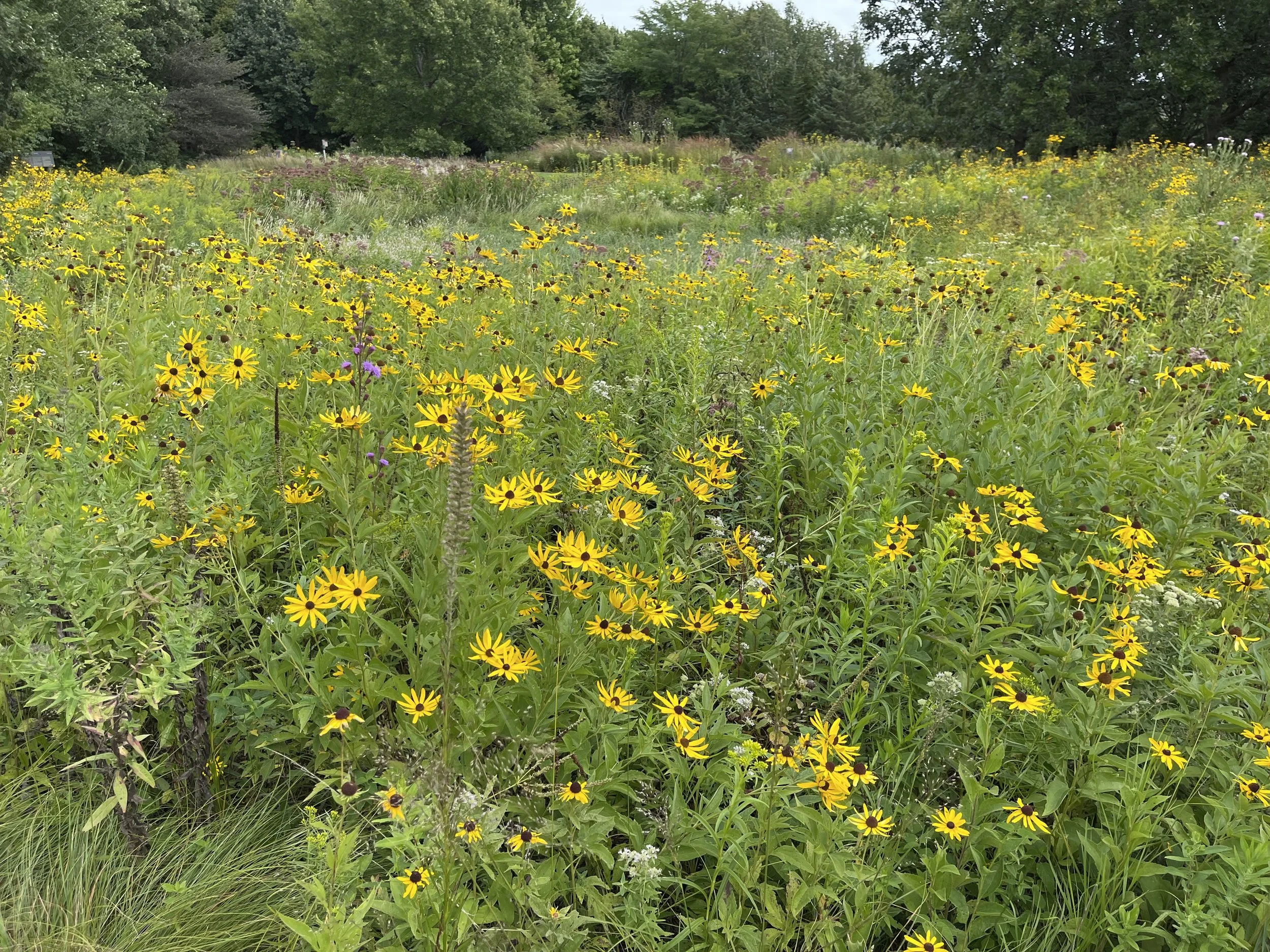
Plants are not props. Plants are living participants of a design, not decorative objects. They are not commodities to be selected, positioned, and arranged simply to complete a composition. They are living entities, with their own rhythms, needs, relationships, histories, and responses to the world around them. They should be understood and designed as part of a larger, living ecosystem. This is something I was taught by my mentor early in my career, and it is a principle that resonates deeply with Indigenous knowledge and traditional ecological wisdom passed down through generations: that plants are not separate from us or from the landscape, but part of an interconnected living system.
How Landscape Design Differs from Architecture and Interior Design
A landscape is fundamentally different from architecture or interior design because it is alive. A stone wall remains largely as it was built. A chair does not change its character with the seasons. A plant, however, is continually growing, responding, adapting, flowering, going dormant, reproducing, and ultimately returning to the soil. Its presence is never entirely static.
This is what makes landscape design both more complicated and more rewarding.
When we select a plant, we are not simply choosing a color, texture, height, or form. We are introducing a living organism into a particular environment. Will it receive the light it needs? Is the soil appropriate? Will it have enough room to mature? How will it interact with the plants around it? Will it provide food or shelter for birds, insects, and other organisms? How will it change the experience of the garden over the course of a year—or over decades?
These questions shift the act of planting from decoration toward stewardship.
Time in Landscape Design
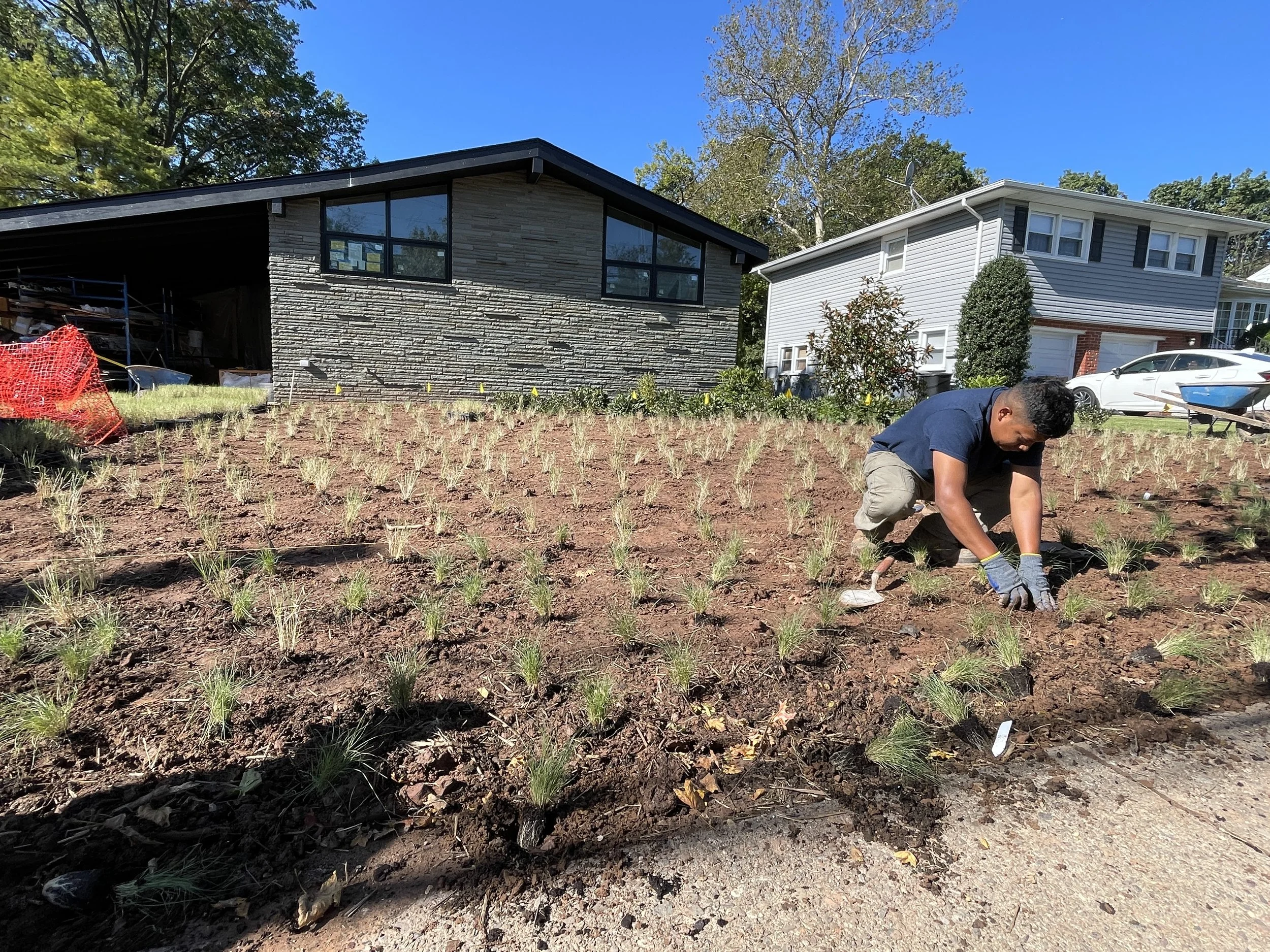
There is also something important in allowing plants to be themselves. A landscape does not need to remain frozen in the moment it was installed. In fact, some of the most compelling gardens are those that reveal the passage of time. Plants become larger, some disappear, others self-seed and emerge in unexpected places. Flowering periods overlap. Leaves change color. Seed heads remain through winter. What was once an empty space becomes a habitat, a microclimate, and an evolving ecosystem.
This does not mean abandoning design or allowing a garden to become chaotic. Quite the opposite. Good landscape design establishes the conditions in which living things can thrive. It considers structure, proportion, seasonality, maintenance, ecology, and human experience while leaving room for nature to participate in the outcome.
We believe this is particularly important today, when plants are increasingly treated as interchangeable products—something to be specified, purchased, delivered, and installed. That approach can reduce a living landscape to a collection of objects.
Instead, we think about plants as collaborators.
Time is the fourth dimension of landscape design, shaping how gardens grow, mature, and evolve over the seasons and years.
A tree may eventually become larger than originally imagined. A perennial may spread beyond the place where it was planted. A vine may find its own path. A planting may attract pollinators that were not anticipated in the original design. These are not necessarily failures of the design. They are manifestations of a living system.
The role of the landscape designer is therefore not simply to control nature, but to understand it, work with it, and create the conditions for it to flourish.
A garden should have a life beyond the day it is installed. It should mature, change, surprise us, and become increasingly connected to its surroundings. The best landscapes are not merely beautiful when they are finished. They become more interesting as they grow older.
Plants remind us that a landscape is never truly finished.
It is alive.