
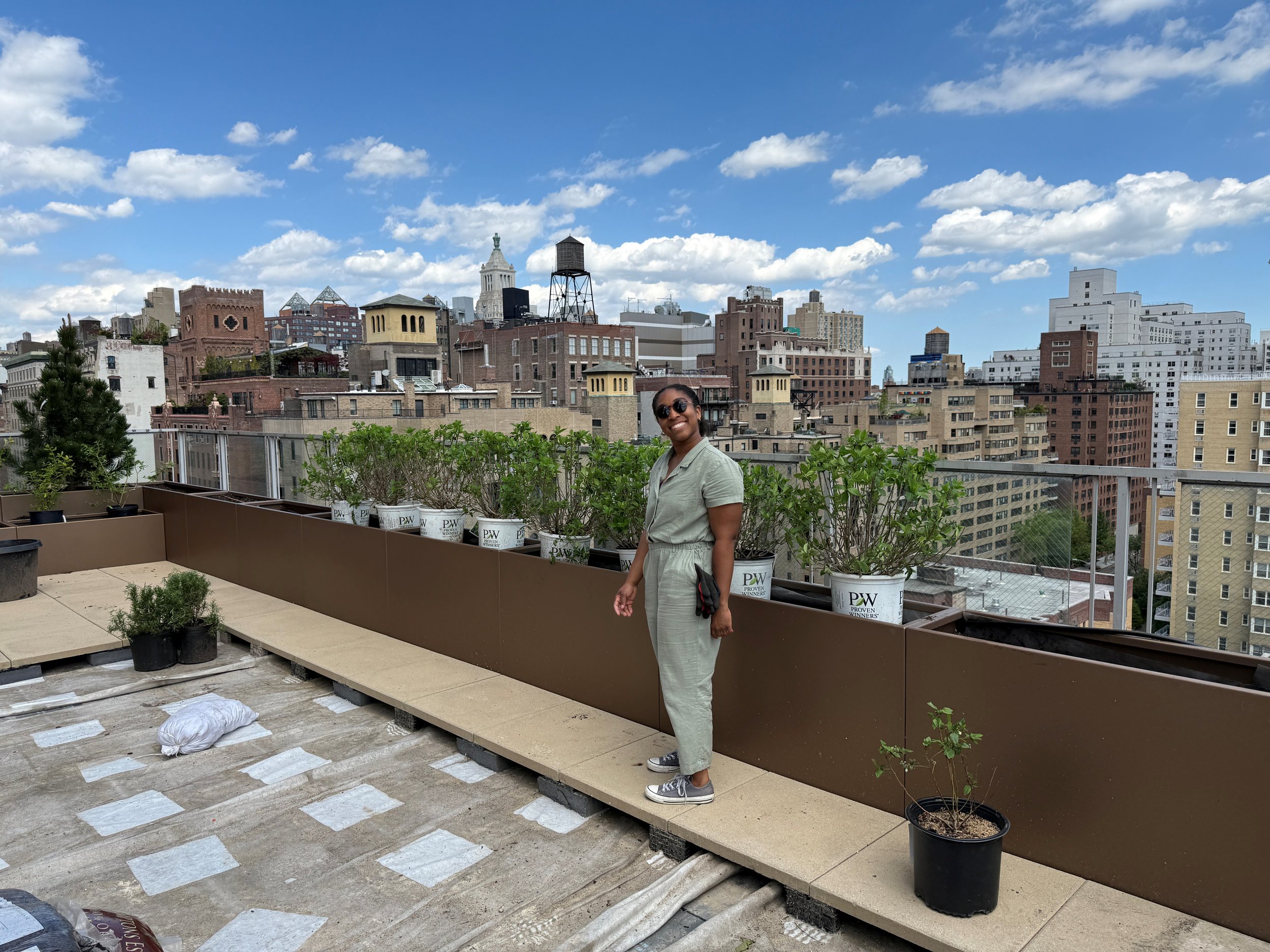
In a city like New York, where outdoor space is often limited, a rooftop can offer something increasingly valuable: a connection to nature above the street. But transforming a bare roof into a garden involves more than adding planters and greenery. It requires an understanding of the building, the exposure, and how the space will be used throughout the year.
Urban rooftop gardens and green roofs are two ways to bring nature into the built environment. While they share many benefits, they serve different purposes, and understanding that distinction is the first step toward creating a successful design.
What Is the Difference Between a Rooftop Garden and a Green Roof?
A rooftop garden is designed as an outdoor living space. It may include seating areas, pathways, trees, layered planting, lighting, and carefully selected materials that make the roof feel like a natural extension of the home. The emphasis is on how people experience and use the space.
A green roof, on the other hand, is primarily designed to cover a roof with vegetation. It often uses a relatively shallow growing medium and plants selected to withstand exposure, retain rainwater, and require limited maintenance. Some green roofs are designed for environmental performance rather than regular human access, while others incorporate paths and seating.
The two approaches can also work together. As a solution to the new 2025 building codes in New York City, Todd Haiman Landscape Design has been creating hybrid green roof gardens - a combination of extensive and intensive applications. In some instances, raised planters are restricted from being within 21” of a parapet. In those instances, we use a shallow soil/substrate depth of 6-8”. The plant material is at grade, rather than being elevated within a planter. The visitor to the garden feels as if they were walking thru a landscape, the experience is less intentional. The most appropriate solution depends on the building's structure, the available space, and the homeowner's priorities.
Designing for the Challenges of an Urban Rooftop
Rooftops have growing conditions that differ considerably from gardens at ground level. Wind can dry out plants and damage exposed branches, while direct sunlight and reflected heat from surrounding buildings can make certain areas difficult to plant. Limited soil depth also affects which trees, shrubs, and perennials can thrive.
These conditions should guide the design from the beginning. Plant selection needs to account for sun exposure, wind, drainage, and the amount of growing medium available. In exposed locations, a combination of hardy plants and carefully positioned screening can create a more sheltered environment without making the rooftop feel enclosed.
Structural capacity is equally important. Planters, soil, paving, furniture, and people all contribute to the roof's load. Before introducing substantial planting or new hardscape, the roof should be assessed by a qualified structural professional. Waterproofing and drainage must also be addressed to protect the building below.
Making a Rooftop Garden Feel Like a Real Garden
A successful rooftop garden should feel considered rather than crowded. In a compact space, every element has a role to play. A well-placed tree can provide shade and establish a focal point, while shrubs and perennials create layers of texture and seasonal interest.
The balance between planting and hardscape is particularly important. Thoughtful spacing, changes in plant height, and a clear layout help create a sense of depth even when the footprint is modest.
Materials also influence how the space feels. Wood, stone, and other finishes that complement the building can create a more cohesive design. At the same time, lighting, comfortable seating, and some degree of privacy can make the rooftop useful beyond daylight hours.
For urban homes, the aim is not necessarily to fill every available corner with greenery. It is to create a space where architecture, planting, and everyday life work together.
The Environmental Benefits of Green Roofs
Green roofs can help reduce the amount of rainwater that runs directly into urban drainage systems by retaining some rainfall and releasing it gradually. Vegetation can also help moderate roof temperatures, reduce heat gain, and provide habitat for pollinators and other wildlife.
These benefits vary according to the roof's design, the depth of the growing medium, the plant selection, and local weather conditions. A shallow green roof planted with drought-tolerant species will perform differently from a deeper rooftop garden with trees and shrubs.
For homeowners, the environmental value can be an important part of the decision, but it should be considered alongside maintenance requirements, structural limitations, and the intended use of the space.
Planning for Long-Term Success
A rooftop garden is exposed to changing conditions throughout the seasons. Plants may need additional irrigation during hot weather, drainage systems require periodic inspection, and planters must be checked to ensure that plants have enough room to mature. Access for maintenance should be considered during the initial design rather than treated as an afterthought.
It is also worth thinking about how the garden will look in winter. Evergreen plants, interesting branch structures, durable materials, and well-planned lighting can help maintain visual interest when many perennials are dormant.
Todd Haiman Landscape Design approaches Rooftop Garden Design as a balance between the practical demands of an exposed site and the experience of spending time outdoors. The strongest designs respond to the architecture, make thoughtful use of limited space, and allow the planting to develop naturally over time.
Urban rooftops offer an opportunity to bring greenery into places where it might otherwise be absent. Whether the priority is environmental performance, outdoor living, or a combination of both, a well-planned rooftop should feel like an intentional part of the building, not simply a roof covered with plants.
