
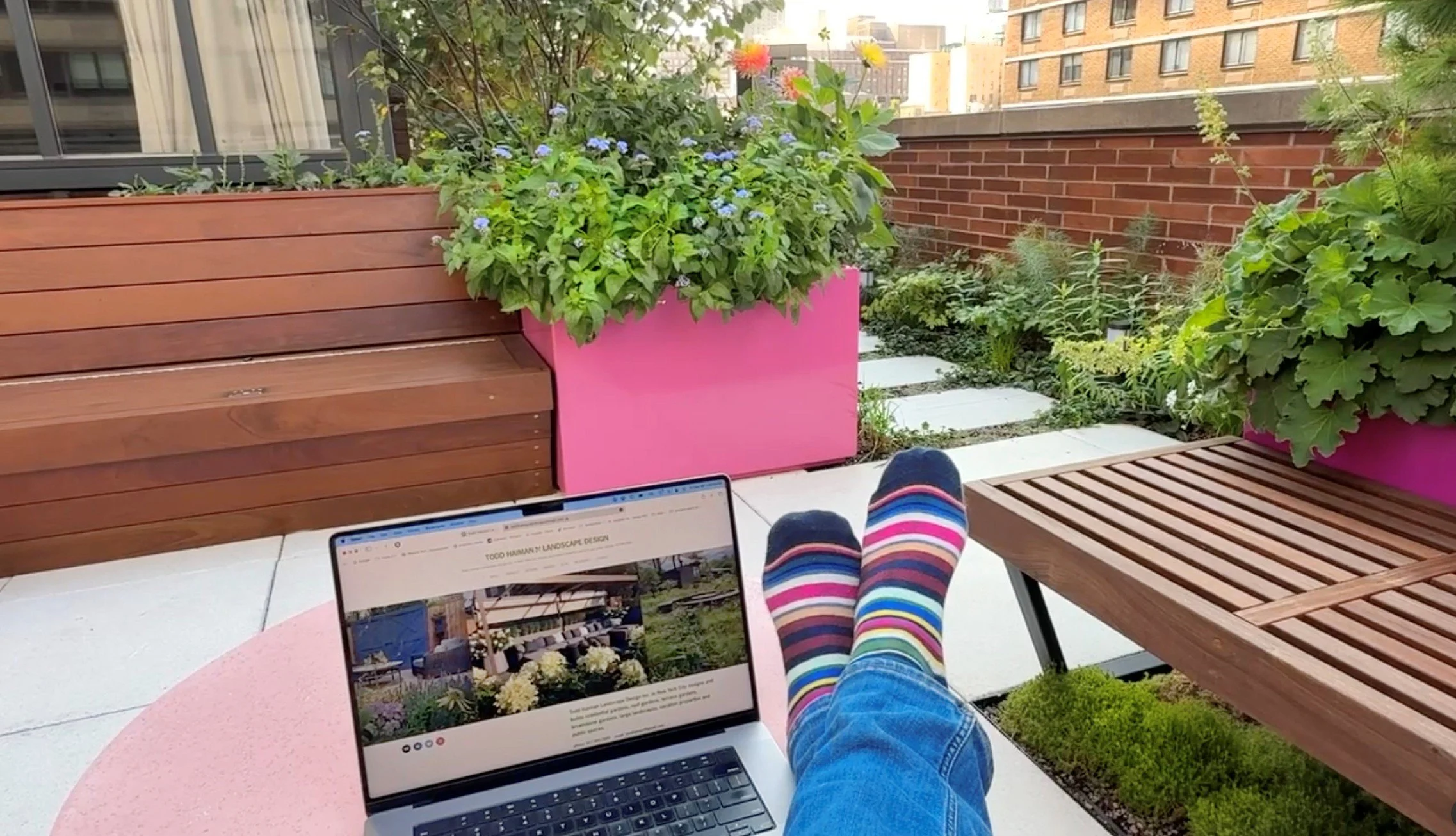
A rooftop patio can provide valuable outdoor space in an urban home, offering room to relax, entertain, or enjoy a garden above the street. However, building a rooftop patio requires more planning than creating a patio at ground level. Materials must withstand changing weather conditions, work with the building's structure, and protect the roof beneath them.
At Todd Haiman Landscape Design, rooftop design involves balancing the needs, aspiration of the client, their lifestyle, opportunities and constraints of the site. Choosing the right materials from the beginning helps create a patio that remains comfortable, functional, and attractive over time.
What to Consider Before Choosing Rooftop Patio Materials
Before selecting paving, decking, or other finishes, assess the conditions of the rooftop. Direct sunlight, strong winds, rain/snow, and seasonal temperature changes can affect how materials perform over time.
Weight is another important consideration. Pavers, decking systems, planters, and outdoor furniture all contribute to the roof's overall load. A qualified structural professional should confirm the roof's capacity before a design in established and substantial materials or features are introduced.
Waterproofing and drainage also need attention. The finished floor should protect the roofing membrane and allow water to drain properly, preventing moisture from collecting beneath the surface.
Best Materials for a Rooftop Patio
Different materials offer different benefits. The right choice depends on the building, the available budget, the desired appearance, and how the patio will be used.
1. Concrete Pavers
Concrete pavers offer flexibility in size, color, and layout. They can create a clean, understated surface or be combined in patterns to define different areas of a patio.
Their weight is an important consideration on rooftops, and are the number one choice for developers, architects and designers looking for weighted product that wont be in danger of wind load. Some products may absorb moisture or show staining over time. Selecting suitable exterior-grade pavers and an appropriate installation system helps improve long-term performance.
Concrete pavers can be a practical choice when the structural and drainage requirements of the building allow for them.
2. Porcelain Pavers
Porcelain pavers are a popular option for contemporary rooftop patios. They are available in a range of colors, textures, and finishes, including designs that resemble natural stone or wood.
Their resistance to moisture and staining makes them practical for outdoor use, while their relatively low maintenance requirements appeal to homeowners who want an easy-to-care-for surface. Textured, outdoor-rated products can also provide better slip resistance when wet.
For rooftop installations, the pavers and support system must be suitable for exterior use and compatible with the roof assembly. They are not a safe choice in an exposed environment which is susceptible to strong winds unless secured from wind lift.
3. Natural Stone
Natural stone can give a rooftop patio a distinctive appearance that complements both traditional and modern architecture. Materials such as granite, bluestone, and limestone offer different colours, textures, and surface characteristics.
Stone is generally durable, but its weight, porosity, and maintenance requirements vary by type. Some stones may need sealing, while others can become hot in direct sunlight or slippery when wet, depending on their finish.
Before choosing natural stone, consider the roof's load capacity and select a finish appropriate for the local climate and expected foot traffic.
4. Composite Decking
Composite decking offers the appearance of wood with generally less routine maintenance than traditional timber. It is available in a variety of colours and finishes, making it suitable for rooftop patios designed around seating, dining, and outdoor entertaining.
Unlike many wood products, composite decking does not require regular staining. However, its performance depends on the product selected, installation method, ventilation, and exposure to sunlight. Some products can become hot in direct sun, so colour and location are worth considering. In some cities such as New York City, building code considers composite decking a combustible product and only allows <20% coverage for a roof or terrace.
The decking system should be designed for rooftop use, with appropriate support, drainage, and access to the roofing membrane.
5. Natural Wood Decking
Wood decking can bring warmth and a natural feel to a rooftop patio. Options such as hardwoods and suitable exterior-rated timber can work well when selected for the site's conditions and installed correctly. In some cities such as New York City, building code considers wood a combustible product and only allows <20% coverage for a roof or terrace.
Wood requires more ongoing care than many alternative materials. Depending on the species and exposure, it may need cleaning, sealing, or other maintenance to manage moisture and weathering.
A raised decking system can allow drainage and provide access to the roof below, but the supporting structure must be compatible with the waterproofing system. Proper detailing is essential to avoid damaging the roof membrane.
Which Rooftop Patio Materials Require the Least Maintenance?
If low maintenance is a priority, concrete pavers and quality composite decking are often worth considering. Both can reduce the need for regular sealing or staining, although routine cleaning and periodic inspections are still necessary. Porcelain is prone to breaking if heavy objects are dropped on them.
Natural stone and wood can also last for many years, but their care requirements depend on the material, finish, exposure, and installation quality.
It is worth remembering that the surface material is only one part of a durable rooftop patio. Drainage, waterproofing, secure installation, and access for maintenance are equally important.
How to Make Your Rooftop Patio Last Longer
A durable rooftop patio begins with a well-planned design. Materials should be selected for the building's conditions rather than appearance alone, and every part of the installation should work with the roof's waterproofing and drainage systems.
Consider these practical steps:
Assess structural capacity: Confirm that the roof can safely support the proposed materials, furniture, planters, and occupants.
Protect waterproofing: Use an installation system designed to protect the roofing membrane and allow access for inspections.
Plan for drainage: Ensure rainwater can flow away without pooling beneath paving or decking.
Choose suitable finishes: Consider slip resistance, heat retention, moisture exposure, and seasonal temperature changes.
Allow for maintenance: Make sure drains, roof components, and areas beneath raised surfaces can be inspected when needed.
At Todd Haiman Landscape Design, these practical considerations are part of creating rooftop spaces that work with the building while supporting comfortable outdoor living.
Choosing the Right Materials for Your Rooftop Patio
There is no single material that works best for every rooftop patio. Porcelain pavers may suit homeowners seeking a clean, low-maintenance finish, while natural stone offers varied textures and character. Composite decking can create a comfortable outdoor living area, and natural wood provides warmth when its maintenance requirements are understood.
The best choice depends on your building's structure, the local climate, your preferred style, and how you intend to use the space. With careful material selection and attention to waterproofing and drainage, a rooftop patio can become a durable and enjoyable extension of your home.
If you are planning a rooftop patio in New York City, Todd Haiman Landscape Design can be a useful starting point for exploring how materials, planting, and layout can come together in a well-considered outdoor space.
