
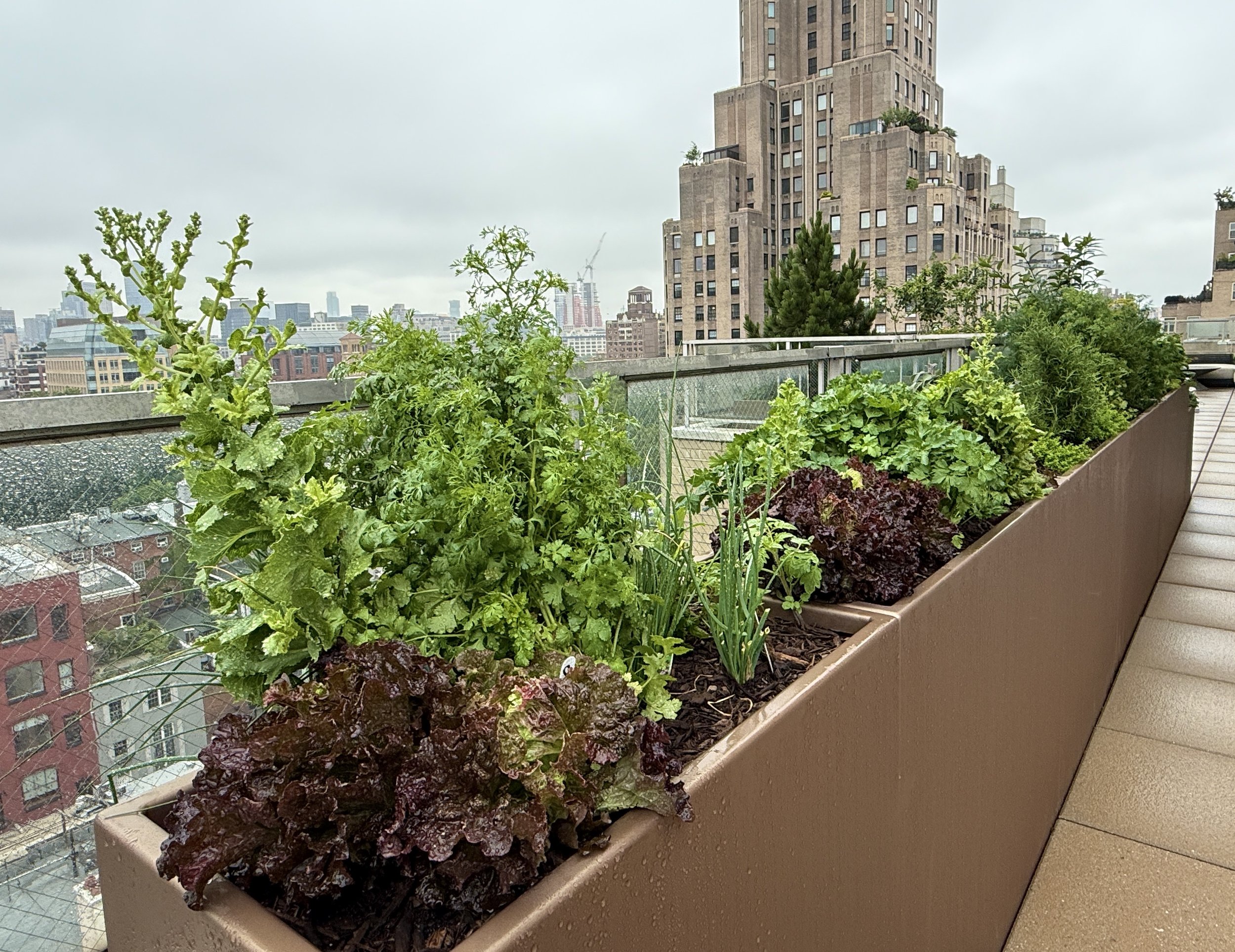
In New York City, where outdoor space is limited, rooftops offer an opportunity to bring more greenery into the urban environment. Growing herbs, fruit trees, and edible shrubs on a rooftop can make an underused space more productive while creating a closer connection to nature.
Although rooftop farming is often associated with large-scale food production, edible planting can also be incorporated into residential rooftop gardens. With thoughtful planning, these spaces can support urban sustainability while remaining comfortable and attractive places to spend time outdoors.
Making Better Use of Urban Space
Rooftops provide additional space for growing plants without taking up valuable ground-level areas. Herbs such as rosemary, thyme, sage and mint can grow in suitable containers, while certain fruit trees (serviceberries) and edible shrubs (such as blueberries) can thrive in appropriately sized planters.
For NYC homeowners, incorporating edible plants into a rooftop garden offers a practical way to make better use of limited outdoor space. The selection depends on sunlight, wind exposure, container size, and the growing conditions available on the roof.
Supporting Local Food Growing
Growing herbs, fruits, and other edible plants at home can provide fresh ingredients close to where they are used. Even a small collection of containers can produce herbs for everyday cooking or seasonal fruit, depending on the plants selected and their growing conditions.
While a residential rooftop garden will not replace the city's wider food supply, it can introduce homeowners to growing some of their own food. It also offers an opportunity to learn more about seasonal planting and the care required to maintain edible plants in an urban setting.
Helping Manage Rainwater and Urban Heat
Vegetation can contribute to a more sustainable urban environment. Plants and growing media can retain some rainfall, reducing the amount of water that immediately runs off the roof. Greenery can also help moderate roof temperatures by providing shade and cooling through evapotranspiration.
The extent of these benefits depends on the planting design, growing medium, roof construction, and local weather conditions. Proper drainage and waterproofing remain essential, particularly when edible plants are grown in containers on residential rooftops.
Creating Space for Pollinators
Flowering herbs, fruit trees, and edible shrubs can provide nectar, pollen, and other resources for bees and other pollinators. Choosing a variety of plants with different flowering periods can help provide resources across more of the growing season.
Even a relatively small rooftop garden can contribute to urban biodiversity when plants are selected carefully. The growing conditions and available space should guide the choices, especially on rooftops exposed to strong winds or intense sunlight.
Planning an Edible Rooftop Garden in NYC
Growing edible plants on a rooftop requires more than choosing what to plant. Container size, soil depth, irrigation, sunlight, and wind exposure all influence plant health. Fruit trees may require larger containers and additional structural consideration, while herbs and smaller shrubs can be easier to accommodate in compact spaces.
The building's load capacity, waterproofing, and drainage should also be assessed before adding planters and growing media. Selecting plants suited to the site can reduce maintenance and improve the chances of long-term success.
At Todd Haiman Landscape Design, edible plants such as herbs, fruit trees, and shrubs can be considered as part of a thoughtfully designed rooftop landscape. The aim is to integrate planting into the overall space so that it complements the architecture and supports outdoor living, rather than treating the rooftop solely as a place for food production.
Bringing Sustainability Into Rooftop Design
Rooftop planting offers NYC homeowners a way to introduce more greenery into their surroundings while making productive use of limited space. Herbs, fruit trees, and edible shrubs can provide fresh ingredients, support pollinators, and contribute to a greener urban environment.
With careful plant selection and attention to structural and growing requirements, an edible rooftop garden can combine practical benefits with an enjoyable outdoor setting.
